
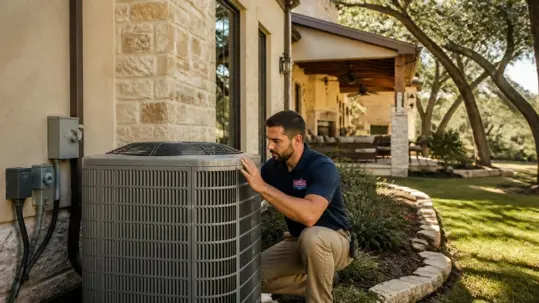
What Happens During a Fall HVAC Tune-Up in Austin, TX?
A fall HVAC tune-up is more than getting your heater ready for cooler weather. It is an opportunity to check your HVAC system, airflow, electrical components, safety controls, and indoor air quality before Central Texas homeowners spend more time indoors.
For Austin and Central Texas homeowners, that timing matters. We may not think of fall as “heating season” when the afternoon temperature can still feel like summer, but cooler nights are coming. A heating tune-up gives your HVAC professional an opportunity to find developing problems before your system has to work through a cold front.
At Lantz Home Services, we believe homeowners should understand what is happening in their homes and why a recommended service matters. With more than 50 years of experience serving Lago Vista, Austin, and surrounding Central Texas communities, our goal is not to push unnecessary repairs. It is to diagnose what your system actually needs, explain your options, and help you make an informed decision for your home.
Why Schedule an HVAC Tune-Up in the Fall?
Texas homeowners tend to think about HVAC maintenance when something stops working. That makes sense when your air conditioner is struggling during a 100-degree Austin afternoon.
Heating problems can be different.
Your furnace, heat pump, or other heating equipment may sit relatively unnoticed while you are still using your air conditioner. Then the first significant cold snap arrives, and suddenly everyone in the house wants heat at the same time.
A fall HVAC tune-up helps you get ahead of that moment.
Professional HVAC maintenance can identify issues involving:
Electrical components
Airflow
Filters
Coils and other system components
Thermostat operation
Safety controls
Heating performance
Unusual system operation
Components showing signs of wear
Problems that could affect efficiency or reliability
For Central Texas homeowners, this can be especially useful because HVAC systems often work hard year-round. Heat pumps, for example, can provide both heating and cooling, meaning they may not have a true “off-season.” Lantz's HVAC guidance recommends annual professional maintenance along with regular homeowner maintenance such as changing filters and keeping outdoor equipment clear.
What Happens During a Fall HVAC Tune-Up?
A professional heating inspection should be more thorough than simply turning the thermostat to “heat” and waiting for warm air.
Here is what homeowners can generally expect during a fall HVAC tune-up.
1. Your Technician Starts With the System's History
Before testing equipment, a good HVAC technician should understand what has been happening with your system.
Have you noticed:
Strange noises?
Uneven temperatures?
Longer heating cycles?
A thermostat that does not seem accurate?
Higher-than-usual energy usage?
Frequent cycling?
Weak airflow?
An unusual smell when the heat turns on?
These details matter because homeowners often notice changes before a component completely fails.
If your system has needed repairs recently or is getting older, that information can also help your technician determine where additional attention may be appropriate.
2. The Thermostat Is Checked
Your thermostat is the control center for your HVAC system.
During a heating inspection, your technician may verify that the thermostat is communicating properly with the equipment and that the system responds appropriately to temperature changes.
This is important because a heating problem is not always a heating-equipment problem.
A thermostat issue, electrical problem, airflow restriction, or another component can create symptoms that look like a failing furnace or heat pump.
The goal is to diagnose the system instead of guessing.
3. Electrical Components Are Inspected
Heating equipment depends on electrical components to operate safely and reliably.
A professional HVAC inspection can include checking electrical connections and components for signs of wear, damage, or abnormal operation.
This is one reason it can be helpful to work with a company that understands HVAC and electrical systems together.
At Lantz Home Services, plumbing, HVAC, and electrical services are available under one company. That matters because residential systems do not always operate independently. An HVAC issue can involve electrical components, just as other home problems can cross trade boundaries.
4. Airflow Is Evaluated
Your heating system can be operating, but that does not necessarily mean your home is receiving the comfort you expect.
Airflow problems can contribute to:
Uneven temperatures
Longer heating cycles
Reduced comfort
Increased system workload
Poor performance
Your air filter is one of the easiest things for a homeowner to maintain. However, airflow can also be affected by ductwork, equipment condition, and other system issues.
The correct filter and replacement schedule depend on the equipment and household conditions, so follow your manufacturer's recommendations and ask your HVAC professional if you are unsure.
5. Heating Performance Is Tested
This is where the tune-up becomes more than a visual inspection.
Your technician will operate the heating system and evaluate how it performs.
Depending on your equipment, that can involve checking whether the system starts correctly, runs properly, reaches the expected operating conditions, and cycles as it should.
The technician is looking for abnormalities that could become bigger problems later.
For example, short cycling can place additional stress on equipment. Poor airflow can make a system work harder. An electrical component showing signs of failure may eventually cause a system shutdown.
Finding those issues while the system is operating normally gives homeowners more options than discovering them during an emergency.
6. Safety Controls Are Checked
Heating equipment has safety controls designed to help protect your home and the system.
During a professional heating inspection, those controls and other relevant safety components may be evaluated to make sure the equipment is operating as intended.
For homes with gas furnaces, combustion and heat exchanger concerns deserve particular attention. Lantz has previously addressed heat exchanger cracking and carbon monoxide risks, including how repeated heating cycles and other conditions can contribute to component stress.
If your technician finds a safety concern, that should be explained clearly before additional work is performed.
7. Your Technician Looks for Signs of Wear
Preventive maintenance is not about predicting the exact day a component will fail.
Instead, it is about looking for evidence that something may be deteriorating.
Your HVAC professional may identify:
Corrosion
Electrical wear
Abnormal sounds
Restricted airflow
Dirty components
Performance changes
Aging parts
Drainage concerns
Other conditions that could affect reliability
That information can help you decide what to do next.
Sometimes the answer is simple: keep using the system and monitor it.
Sometimes a small repair makes sense.
Sometimes the equipment is old enough that planning for replacement is more practical than continuing to repair it.
The important part is understanding why.
What If Your HVAC System Is a Heat Pump?
This is especially relevant for Austin-area homeowners.
Heat pumps operate differently from traditional heating systems because they can provide both cooling and heating. In Central Texas, they may work throughout much of the year.
That means maintenance is not simply about preparing a furnace for winter.
A professional inspection can look at system operation, electrical components, airflow, refrigerant-related concerns, coils, condensate drainage, and other components depending on the equipment.
Lantz's Central Texas heat pump guidance notes that heat pumps do not have the same clear seasonal break found in colder climates, making regular maintenance particularly important.
What Can Homeowners Do Between Tune-Ups?
Professional maintenance is only part of taking care of your HVAC system.
There are several things homeowners can do throughout the year.
Change Your Air Filter
A dirty filter can restrict airflow and make your system work harder. Check your filter regularly and follow the manufacturer's recommendations for replacement.
Keep Outdoor Equipment Clear
Remove leaves, grass, branches, and other debris from around your outdoor HVAC equipment. Maintain appropriate clearance so the system can move air properly.
Pay Attention to Changes
Your HVAC system can give you warning signs before it stops working completely.
Watch for:
Unusual noises
Weak airflow
Uneven temperatures
Short cycling
Rising energy usage
Strange odors
Ice or unusual moisture
A system that runs continuously
Difficulty maintaining the thermostat setting
If something suddenly seems different, do not assume it is normal simply because the system is still running.
Does an HVAC Tune-Up Prevent Every Repair?
No.
A tune-up cannot guarantee that a component will never fail. Mechanical and electrical equipment can experience unexpected problems, especially as it ages.
What maintenance can do is provide information.
It gives you an opportunity to identify developing issues, understand the condition of your equipment, and address certain problems before they become urgent.
That can be particularly valuable for homeowners who would rather make decisions on their own timeline instead of making them during a freezing night or holiday weekend.
Fall HVAC Maintenance Is About More Than Heating
Your HVAC system is connected to the rest of your home.
Electrical problems can affect HVAC operation. Plumbing and drainage issues can affect condensate systems. Indoor air quality can influence comfort. Water heaters, electrical panels, plumbing fixtures, and HVAC equipment all contribute to how your home functions.
That is one reason Lantz Home Services brings plumbing, HVAC, and electrical expertise together. The company serves Austin, Lago Vista, Lake Travis communities, and surrounding Central Texas areas, including homes with specialized systems such as private wells and grinder pumps.
When your home has a problem, you should not have to become the expert in every trade before calling for help.
Why Fall Is Also the Right Time to Think About Indoor Air Quality
A fall HVAC tune-up is not only about getting your heating system ready for cooler weather. It is also a good opportunity to take a closer look at the indoor air quality in your Austin-area home.
As temperatures cool, Central Texas homeowners may begin keeping windows and doors closed more often. Your HVAC system then becomes an even bigger part of how air moves throughout the home.
That makes fall a useful time to ask:
What are we actually breathing inside the house?
Indoor air can contain dust, pollen, pet dander, airborne particles, and other contaminants. Homes with children, pets, allergy concerns, or residents who spend significant time indoors may be particularly interested in improving filtration and overall indoor air quality.
During a fall HVAC visit, your technician can help identify opportunities to improve how your system filters and circulates air.
Check Your Air Filter
Your HVAC filter is one of the simplest pieces of your indoor air quality strategy, but it is also easy to overlook.
A filter that is loaded with dust and debris can restrict airflow and make your HVAC system work harder. The wrong filter can also affect airflow or fail to provide the filtration your household needs.
Your technician can help you understand what type of filter is appropriate for your HVAC equipment and how frequently it should be changed.
Look Beyond the Filter
An HVAC filter is important, but it is not the only factor that affects indoor air quality.
Depending on your home and HVAC system, other considerations may include:
Air filtration
Air purification
Dust and airborne particles
Pet dander
Pollen
Ventilation
Humidity levels
Ductwork condition
HVAC system cleanliness
The right solution depends on the home. A homeowner dealing with excessive dust may have different needs than a family concerned about seasonal allergens or a home with multiple pets.
That is why indoor air quality should start with understanding the problem rather than automatically adding equipment.
Central Texas Has Its Own Indoor Air Quality Challenges
Austin-area homeowners know that allergy season does not simply disappear when summer ends.
Central Texas has its own combination of pollen, dust, outdoor air particles, and seasonal changes. Add pets, household activity, and a home that stays closed up more often, and indoor air quality can become an important part of fall home maintenance.
If you notice excessive dust, persistent odors, poor airflow, or other changes in your home's air, mention them during your HVAC appointment.
Your HVAC system is part of the solution, but your home itself can provide important clues about what is happening.
How HVAC Maintenance and Indoor Air Quality Work Together
Think of your HVAC system as more than the equipment that makes the house hot or cold.
It also moves air throughout your home.
That means maintenance can be an opportunity to look at the bigger picture: Is the system moving air properly? Is the filter appropriate? Are there signs of restricted airflow? Could additional air filtration or purification make sense for the household?
For Austin and surrounding Central Texas homeowners, combining seasonal HVAC maintenance with an indoor air quality check can help you head into fall with a better understanding of both comfort and the air inside your home.
And just like heating maintenance, indoor air quality is not something you necessarily want to think about only after you notice a problem.
Indoor Air Quality and the Ultimate Home Care Plan
Indoor air quality can also be part of a broader approach to home maintenance.
The Ultimate Home Care Plan from Lantz Home Services is designed around proactive maintenance and helping homeowners stay ahead of problems rather than waiting for every issue to become an emergency.
Seasonal HVAC inspections provide an opportunity to evaluate system operation, airflow, and other factors that can affect comfort and indoor air quality.
For busy homeowners in Austin, Westlake, Bee Cave, Lakeway, Lago Vista, and surrounding communities, regular professional maintenance can make it easier to keep track of the systems that quietly work every day to keep your home comfortable.
Fall HVAC Tune-Up FAQ: Indoor Air Quality
Can an HVAC tune-up improve indoor air quality?
An HVAC tune-up can identify conditions that may affect airflow and filtration, but a tune-up alone does not guarantee improved indoor air quality. Depending on the home, additional filtration, purification, ventilation, or other solutions may be appropriate.
What is the best air filter for an Austin home?
There is not one filter that is best for every home. The correct filter depends on your HVAC equipment, system specifications, airflow requirements, and household needs. A filter with a higher rating is not automatically better if the HVAC system is not designed to handle it.
Why is my house so dusty in the fall?
Dust can come from many sources, including normal household activity, outdoor particles, pets, HVAC airflow, and filtration issues. If you notice a significant change in dust levels, have your HVAC system and indoor air quality evaluated rather than assuming the filter is the only cause.
Does indoor air quality matter if my HVAC system is working normally?
Yes. An HVAC system can maintain your thermostat setting while there are still opportunities to improve filtration, airflow, or other aspects of indoor air quality. Comfort and indoor air quality are related, but they are not exactly the same thing.
Related Lantz Home Services
A fall HVAC tune-up is one part of keeping your home comfortable and dependable.
Lantz Home Services provides residential:
Plumbing repair and installation
Because HVAC, plumbing, and electrical systems can overlap, having one local team familiar with your home can simplify maintenance and troubleshooting.
Ultimate Home Care Plan
If remembering seasonal home maintenance is one more thing on your already-long list, the Ultimate Home Care Plan can help.
The Lantz Home Services Ultimate Home Care Plan is built around proactive maintenance for the major systems homeowners depend on. Membership includes seasonal HVAC inspections, including a fall heating inspection, along with maintenance options for plumbing and electrical systems.
The goal is not simply to wait for something to break.
Regular inspections can help you understand the condition of your home's systems, keep track of maintenance, and identify developing concerns before they become larger emergencies.
For busy Austin homeowners, second-home owners around the Highland Lakes, and families who would rather spend their weekends doing something other than remembering every maintenance task, having a scheduled plan can make homeownership easier.
Serving Austin and Nearby Central Texas Communities
Lantz Home Services is based in Lago Vista and serves homeowners throughout Austin, North Lake Travis, and surrounding Central Texas communities.
Our service area includes:
Highland Lakes communities
Homes throughout Central Texas are not all built the same. Lake homes, older Austin properties, newer luxury homes, second homes, and Hill Country properties can have very different HVAC, plumbing, and electrical needs.
Local experience matters.
Lantz Home Services has more than 50 years of experience serving homeowners in Lago Vista, Austin, and surrounding Central Texas communities, with licensed and insured technicians across plumbing, HVAC, and electrical services.
Frequently Asked Questions About Fall HVAC Tune-Ups
When should I schedule a fall HVAC tune-up in Texas?
Early fall is a practical time to schedule heating maintenance before colder weather arrives. In Central Texas, temperatures can fluctuate significantly, so scheduling before you need consistent heat can give you time to address developing concerns.
How often should HVAC systems be serviced?
Annual professional HVAC maintenance is a common recommendation. The ideal maintenance schedule can depend on your equipment, how much it operates, its age, and the manufacturer's recommendations.
Is a fall tune-up necessary if my AC worked all summer?
It can still be worthwhile. A system that performed well in cooling mode can have heating-specific components or operating conditions that deserve attention before colder weather. Heat pumps also operate in both heating and cooling modes, making year-round maintenance particularly relevant.
Can an HVAC tune-up lower my electric bill?
Maintenance can help identify conditions that may cause an HVAC system to work harder than necessary, such as restricted airflow or dirty components. However, no responsible HVAC professional should promise a specific savings amount from a tune-up because energy use depends on many factors, including equipment, weather, insulation, thermostat settings, and the home itself.
How do I know if my HVAC system needs more than a tune-up?
Pay attention to changes such as unusual noises, weak airflow, short cycling, uneven temperatures, rising energy usage, strange odors, or difficulty maintaining the thermostat setting. These symptoms may indicate that your system needs diagnostic service or repair rather than routine maintenance.
What is included in an HVAC tune-up?
The exact checklist varies by equipment and service provider, but a professional heating inspection may include evaluating system operation, electrical components, airflow, thermostat operation, safety controls, heating performance, and signs of component wear.
Should I replace my HVAC system instead of tuning it up?
Not necessarily. Age alone does not automatically mean replacement is the right choice. A professional diagnosis can help you understand the system's condition, repair needs, expected reliability, and replacement considerations so you can decide what makes sense for your home and budget.
The Bottom Line
A fall HVAC tune-up is an opportunity to learn what is happening inside one of the most important systems in your home before you depend on it.
For Austin and Central Texas homeowners, that means checking more than whether warm air comes out of the vents. A proper inspection looks at system operation, airflow, electrical components, safety controls, and signs of wear so you have useful information about your home's heating system.
And if your technician finds something that needs attention, you deserve to understand what was found, why it matters, and what your options are.
That is the approach we believe in at Lantz Home Services.
Leave it to Lantz.