
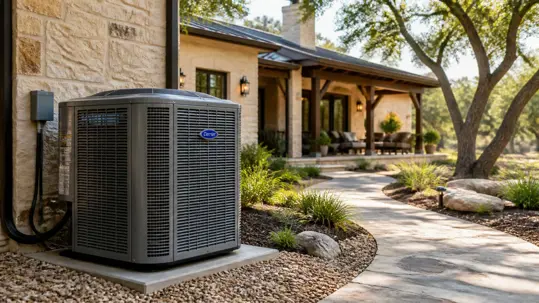
If you live in Central Texas, your air conditioner works hard.
Really hard.
From long summer cooling seasons in Austin and Lago Vista to the heat and humidity around Lake Travis, your AC system can spend months running for hours at a time. So if you are wondering, "How long does an AC system last in Texas?" the honest answer is that there is no single expiration date.
Most residential air conditioning systems can provide roughly 10 to 15 years of service, but Texas heat, maintenance, installation quality, usage, and the condition of the home's ductwork can all affect how long an AC system lasts. ENERGY STAR recommends having an air conditioner evaluated when it is more than 10 years old, especially if it needs frequent repairs or your energy bills are increasing.
That does not mean a 10-year-old AC automatically needs to be replaced. A well-maintained system may have useful life left. On the other hand, an older system that is constantly struggling, driving up energy bills, or needing expensive repairs may be telling you it is time to start planning for replacement.
At Lantz Home Services, we believe homeowners deserve to understand what is happening with their system before making that decision. Our goal is to diagnose the problem, explain your options, and help you make the right choice for your home.
How Long Does an AC System Typically Last in Texas?
A reasonable planning range for a residential central AC system is about 10 to 15 years, although individual systems can last longer or fail sooner.
The U.S. Department of Energy uses an average residential central air conditioner life of 18 years in certain life-cycle cost calculations, while ENERGY STAR uses 10 years as an important point at which homeowners should consider evaluating older cooling equipment. These figures illustrate why there is no universal "replace it at exactly X years" rule.
Texas homeowners also have a unique consideration: how much the system is used.
An air conditioner in Central Texas may operate for a significant portion of the year. Your AC is not simply sitting in the attic or outside waiting for July. It may be working through spring, summer and fall, with occasional winter use for heat pump systems.
The lifespan of your AC can be affected by:
- The age and quality of the equipment
- How well the original system was installed
- Annual HVAC maintenance
- How often the system runs
- Dirty filters and restricted airflow
- Refrigerant problems
- Coil cleanliness
- Ductwork condition
- Attic insulation and air leakage
- Electrical issues
- The size of the system compared with the home
- How aggressively the system has been used during Texas summers
This is why two homes with similar AC systems can have completely different replacement timelines.
Why Texas Heat Can Be Hard on Your AC
Central Texas homeowners know that summer is not exactly gentle.
When outdoor temperatures climb, your AC has to remove heat from your home again and again. If your home has poor insulation, leaky ductwork, restricted airflow or an undersized system, your equipment may have to work even harder to maintain the temperature you have set on the thermostat.
Homes around Austin, Lago Vista, Leander, Bee Cave, Georgetown and the surrounding Central Texas communities can also have very different construction styles and equipment setups.
A large luxury home, an older Lago Vista home, a lake house that sits vacant for periods of time and a newer home in a growing Central Texas neighborhood may all have different HVAC challenges.
That is why replacing an AC system is not simply a matter of picking a bigger unit.
A professional evaluation should consider the entire cooling system, including airflow, ductwork, insulation, electrical capacity and equipment condition. Lantz Home Services specifically approaches AC service this way rather than treating the outdoor unit as an isolated piece of equipment.
7 Signs Your AC System May Be Ready for Replacement
Age alone does not tell the whole story. Look for a pattern of problems.
1. Your AC Is More Than 10 Years Old
Once an air conditioner reaches the 10-year mark, it is worth paying closer attention to its performance and repair history.
This does not automatically mean you need a new AC.
However, if an older system is also showing other warning signs, such as frequent repairs, rising energy bills, inconsistent cooling or refrigerant problems, replacement may make more financial sense than continuing to invest in an aging system.
ENERGY STAR specifically recommends considering replacement when an air conditioner is more than 10 years old, particularly when other performance problems are present.
2. Your Energy Bills Keep Going Up
Texas summers can make your electric bill higher. That is normal.
But if your cooling costs seem unusually high compared with previous years, your AC may be losing efficiency.
Aging equipment can become less efficient over time. However, do not automatically blame the AC.
High energy usage can also be caused by duct leaks, inadequate insulation, airflow problems, thermostat issues or other problems in the home.
That is why proper diagnosis matters before deciding to replace equipment.
3. Your AC Needs Frequent Repairs
One repair does not necessarily mean it is time for a new system.
An eight-year-old AC with one failed component may be a good candidate for repair.
An older system that seems to need another repair every few months is a different story.
When repair costs begin adding up, consider the system's age, repair history, efficiency and remaining useful life. If you are repeatedly spending money to keep an aging system running, a replacement evaluation can help you compare the short-term repair with the long-term cost.
4. Your Home Is Not Cooling Evenly
Do you have one room that feels like an oven while another feels like a freezer?
Uneven cooling can be a sign of an HVAC problem, but it does not necessarily mean the equipment itself needs to be replaced.
Possible causes include:
- Poor ductwork design
- Leaking ducts
- Restricted airflow
- Insufficient insulation
- Thermostat problems
- Incorrect equipment sizing
- A failing component
ENERGY STAR notes that rooms that are too hot or too cold can indicate equipment, ductwork or insulation issues.
Before replacing an expensive AC system, make sure you know what is actually causing the comfort problem.
5. Your AC Is Making New or Unusual Noises
Every air conditioner makes some noise.
But a new grinding, squealing, rattling, buzzing or banging sound deserves attention.
Unusual sounds can indicate a mechanical, electrical or airflow issue. Sometimes the repair is straightforward. Other times, particularly on an older system, the problem may be another indication that the equipment is nearing the end of its useful life.
Do not wait for a strange noise to turn into a complete breakdown during the hottest part of a Texas summer.
6. Your Home Has Humidity Problems
Your AC does more than lower the temperature.
A properly functioning cooling system also helps manage indoor humidity. If your home feels unusually damp even though the thermostat says it is cool, there could be an issue with equipment operation, sizing, airflow or ductwork.
Humidity problems can also make your home feel warmer than the thermostat indicates.
Before assuming you need a new AC, have the system evaluated to determine whether the equipment or another part of the home is contributing to the problem.
7. Your AC Uses Outdated Equipment or Refrigerant
Older systems can become more difficult and expensive to maintain as components and refrigerant become less readily available.
If your aging system develops a refrigerant leak or requires an expensive component, it may be time to compare the repair cost with the benefits of installing a newer system.
This is particularly important when an older system has already developed a pattern of repairs.
Repair or Replace Your AC? Start With the Math
This is one of the most common questions homeowners ask.
"Should I repair my AC or replace it?"
There is no responsible answer without having a home service professional look at the actual system.
A good decision considers:
System age: A newer system with a single repair may make sense to repair.
Repair history: Frequent repairs can change the equation.
Repair cost: A major repair on an older system deserves a replacement conversation.
Energy efficiency: Older equipment may cost more to operate than newer, properly installed equipment.
Comfort: If the system is no longer keeping your home comfortable, that matters.
Future plans: If you plan to stay in the home for many years, investing in a properly designed replacement may provide more long-term value.
Overall condition: A home service professional should evaluate the equipment rather than replacing it simply because it has reached a certain birthday.
At Lantz Home Services, we believe homeowners should receive clear information and options. Our technicians diagnose the system first, then help you understand what makes sense for your home. That may mean repairing the existing AC. It may mean planning for replacement. The important part is knowing why.
What Can You Do to Make Your AC Last Longer?
You cannot make an AC system last forever, but you can give it a better chance of reaching the upper end of its useful life.
Schedule Regular HVAC Maintenance
Preventive maintenance can identify developing issues before they become major breakdowns.
A professional HVAC inspection can look at important components, system operation, airflow and other factors that affect performance.
Change Your Air Filter
A dirty filter restricts airflow and can make your system work harder to cool your home. ENERGY STAR recommends regular HVAC maintenance and notes that dirty filters can reduce airflow and cause the system to work harder.
The correct filter type and replacement schedule depend on your home and equipment, so follow the manufacturer's recommendations and ask your HVAC professional if you are unsure.
Pay Attention to Changes
Your AC often gives you warning signs before it completely fails.
Watch for:
- Longer cooling cycles
- Strange noises
- Rising energy bills
- Weak airflow
- Frequent repairs
- Water around the indoor unit
- Uneven temperatures
- Increasing humidity
- Short cycling
The sooner you investigate a change, the more options you may have.
Do Not Ignore Your Ductwork
Your air conditioner can be in good condition while your ductwork is undermining its performance.
Leaky or poorly insulated ducts can waste conditioned air and make your system work harder. ENERGY STAR recommends addressing duct leakage and insulation as part of improving overall HVAC performance.
Lantz Home Services AC, Plumbing and Electrical Services
Your AC does not exist in isolation.
Your home's HVAC, plumbing and electrical systems all work together to keep your household comfortable and functional.
Lantz Home Services provides residential air conditioning, heating, plumbing and electrical services throughout Austin and surrounding Central Texas communities.
Our AC services include:
- AC repair
- AC maintenance
- AC installation and replacement
- HVAC system diagnostics
- Cooling system inspections
- Comfort and airflow troubleshooting
We also provide plumbing services, water heater services, sewer and drain services, electrical panel services and other home-system solutions.
That means homeowners can work with one trusted local team when multiple home systems need attention. Lantz has more than 50 years of experience serving Lago Vista, Austin and surrounding Central Texas communities.
Protect Your AC With the Ultimate Home Care Plan
If you would rather stay ahead of home repairs instead of waiting for something to fail, the Ultimate Home Care Plan from Lantz Home Services is designed around proactive maintenance.
The plan includes seasonal HVAC inspections, along with maintenance options for other major home systems such as plumbing, electrical and grinder pump systems. The goal is to help homeowners understand the condition of their equipment and catch developing concerns before they become unexpected emergencies.
For homeowners with busy schedules, second homes or aging equipment, having regular maintenance on the calendar can make homeownership easier.
Your AC does not have to surprise you on the hottest afternoon of the year.
A maintenance plan can help you understand what condition your equipment is in, what may need attention and when it may be time to start planning for replacement.
Serving Austin and Surrounding Central Texas Communities
Lantz Home Services is based in Lago Vista and serves homeowners throughout Austin and the surrounding Central Texas area.
Our service area includes:
- Lago Vista
- Austin
- Lakeway
- Bee Cave
- Westlake
- Spicewood
- Point Venture
- Jonestown
- Cedar Park
- Leander
- Round Rock
- Georgetown
- Marble Falls
- Horseshoe Bay
- Surrounding Lake Travis and Central Texas communities
Homes throughout these areas experience the heat, long cooling seasons and unique home-system challenges that make professional HVAC maintenance especially important.
Whether you live in a lakefront home in Lago Vista, a luxury home in Westlake, a family home in Bee Cave or a second home in Horseshoe Bay, your AC system deserves attention before it becomes an emergency.
Frequently Asked Questions About AC Lifespan in Texas
How long should an AC system last in Texas?
A residential AC system can commonly provide around 10 to 15 years of service, although some systems last longer. Maintenance, installation quality, usage, equipment condition and the home's ductwork can all affect lifespan.
Is a 10-year-old AC too old?
Not necessarily. Ten years is an important evaluation point, not an automatic replacement deadline. If your system is 10 years old but reliable and efficient, continued maintenance may make sense. If it also needs frequent repairs or struggles to cool your home, replacement may be worth considering.
How do I know if my AC needs to be replaced?
Look for a combination of warning signs, including an older system, frequent repairs, rising energy bills, inconsistent cooling, humidity problems, unusual noises and declining performance.
Is it cheaper to repair or replace an AC?
It depends on the system's age, repair cost, condition, efficiency and expected remaining life. A professional diagnosis can help you compare the cost of repairing your existing system with the long-term value of replacement.
Can HVAC maintenance extend the life of an AC?
Regular maintenance can help identify developing problems, maintain system performance and address issues before they contribute to larger failures. It cannot guarantee a specific lifespan, but it can help you get the most reasonable service life from your equipment.
Why is my AC running constantly in Texas?
Long cooling cycles can be normal during extreme Texas heat. However, if your system runs constantly and cannot reach the thermostat setting, there may be an issue with the equipment, airflow, ductwork, insulation, sizing or another part of the home.
Should I replace my AC before it completely fails?
Sometimes. If your system is older and showing multiple warning signs, planning a replacement before an emergency can give you more time to compare options and make an informed decision. Waiting until the system fails can leave you making a major home investment under pressure.
Does a new AC automatically fix uneven temperatures?
Not always. Uneven temperatures can be caused by ductwork, insulation, airflow, equipment sizing or other home conditions. A properly designed replacement should address the entire cooling system rather than simply installing a new outdoor unit.
The Bottom Line
A Texas AC system does not have a specific expiration date, but 10 to 15 years is a useful range for homeowners to keep in mind.
If your system is getting older, the most important question is not simply, "How old is it?"
Ask:
How is it performing? How much am I spending to keep it running? Is my home comfortable? And what condition is the rest of the system in?
If your AC is struggling, Lantz Home Services can help you understand what is actually happening before you decide what to do next.
Whether your best option is a repair, continued maintenance or a complete AC replacement, you deserve clear information, honest recommendations and choices that make sense for your home.
Leave it to Lantz.