
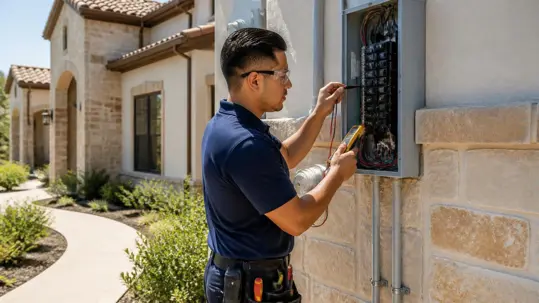
Do I Need an Electrical Panel Upgrade? Signs Austin Homeowners Should Know
If your lights flicker during a storm, your circuit breakers keep tripping, or your electrical panel feels outdated, it may be time to consider an electrical panel upgrade. Your electrical panel is the control center of your home's electrical system, distributing power to everything from your HVAC system and kitchen appliances to your lighting and outlets. When it cannot safely or reliably handle your home's electrical demands, it can lead to recurring electrical problems and potential safety hazards.
For homeowners in Lago Vista, Austin, and the surrounding Central Texas area, rainy weather can make existing electrical issues more noticeable. Heavy rain, lightning, power fluctuations, and moisture intrusion can expose weaknesses in electrical systems that may have gone unnoticed during normal conditions.
But does every flickering light or tripped breaker mean you need a new electrical panel? Not necessarily. Some problems can be resolved with a repair, while others indicate that your electrical panel may be outdated, damaged, or undersized for your household.
At Lantz Home Services, we believe homeowners should understand their options before making decisions about their home's electrical system. Here's how to recognize the signs of an electrical panel problem, understand when an upgrade may be necessary, and know when to call a licensed electrician.
What Does an Electrical Panel Do?
Your electrical panel, sometimes called a breaker box or service panel, distributes electricity from your utility provider throughout your home. It contains circuit breakers that protect individual electrical circuits by interrupting power when they detect certain overloads or faults.
Think of your electrical panel as the traffic controller for your home's electricity. It directs power to different areas of your home while helping prevent electrical circuits from carrying more current than they are designed to handle.
Most modern homes use circuit breakers rather than older fuse-based systems. Depending on your home's age, size, and electrical requirements, your panel may have a different amperage rating, such as 100, 150, or 200 amps.
Your electrical panel supports essential household systems, including:
HVAC systems: Air conditioners, furnaces, heat pumps, and other heating and cooling equipment.
Kitchen appliances: Ovens, cooktops, refrigerators, dishwashers, and microwaves.
Lighting and outlets: Indoor and outdoor lighting, receptacles, and everyday electronics.
Water heaters: Electric tank and tankless water heaters.
Home technology: EV chargers, smart home systems, security equipment, and other modern electrical loads.
As homeowners add appliances, remodel rooms, install electric vehicle chargers, or upgrade HVAC equipment, their electrical needs can change. An electrical panel that worked well 20 years ago may no longer be suitable for the home's current or planned electrical demand.
7 Signs You May Need an Electrical Panel Upgrade
Not every electrical issue requires a panel replacement. However, certain warning signs indicate that your electrical system should be evaluated by a licensed electrician.
1. Your Circuit Breakers Trip Frequently
Circuit breakers are designed to trip when a circuit experiences an overload or certain electrical faults. An occasional trip may happen when you run several high-powered appliances on the same circuit. However, frequent or unexplained tripping could indicate an overloaded circuit, a faulty breaker, damaged wiring, or a panel that cannot accommodate your home's electrical needs.
If your breakers repeatedly trip when your air conditioner, water heater, or other major appliances are operating, have the system inspected. Simply resetting the breaker without identifying the cause does not resolve the underlying issue.
A licensed electrician can determine whether the problem requires a circuit adjustment, a breaker replacement, repairs, or a panel upgrade.
2. Your Lights Flicker or Dim
Have you noticed your lights dimming when your air conditioner starts up or when you turn on a large appliance? Occasional, brief dimming can occur when a large motor starts, but persistent or widespread flickering may indicate a more serious electrical problem.
Possible causes include loose electrical connections, overloaded circuits, voltage fluctuations, deteriorating wiring, or issues with the utility service.
During rainy weather in Central Texas, power fluctuations and storm-related electrical disruptions may make existing problems more noticeable. However, rain itself does not automatically mean your electrical panel is failing.
If multiple lights flicker, especially when appliances are operating, schedule an electrical inspection to identify the cause before the issue worsens.
3. Your Electrical Panel Is Outdated
An older electrical panel is not automatically unsafe, but age can be a reason to have it evaluated, particularly if it has a history of electrical problems or cannot support your home's current needs.
Some older panels may contain outdated components, have limited circuit capacity, or lack features found in modern electrical systems. Certain panel models have also been associated with documented safety concerns.
If your home in Lago Vista, Lakeway, or the greater Austin area has an electrical panel that is several decades old, a professional inspection can help determine whether it remains safe and appropriate for your home.
An electrician can assess the panel's condition, identify any known product safety concerns, and explain whether repairs or replacement are appropriate.
4. You Smell Burning or Notice Scorch Marks
A burning odor near your electrical panel, visible scorch marks, melted components, or unusual discoloration can indicate overheating or an electrical fault.
These are serious warning signs that should never be ignored. Overheating electrical components can increase the risk of fire and cause damage to your home's electrical system.
If you notice a burning smell, smoke, sparks, or signs of melting, keep away from the panel. Do not remove its cover or attempt to investigate the problem yourself. If there is smoke or an active fire, evacuate and call 911. Otherwise, contact a qualified electrician promptly for guidance.
5. Your Panel Makes Buzzing or Crackling Sounds
Electrical panels should not produce persistent buzzing, crackling, popping, or sizzling sounds. These noises can indicate loose connections, arcing, faulty breakers, or other electrical problems.
While a faint mechanical sound may occasionally come from electrical equipment, unusual or increasing noise from your breaker box deserves professional attention.
If you hear crackling or popping, avoid touching the panel and arrange for an electrician to inspect it. If the panel is also hot, smoking, or sparking, move away and seek emergency assistance.
6. You Are Adding Major Appliances or Renovating
Home renovations and new electrical equipment can significantly increase your home's power requirements. Installing an EV charger, adding a hot tub, upgrading to an electric range, or replacing an HVAC system may require additional electrical capacity.
For example, homeowners replacing an older air conditioning system with new equipment may discover that their existing electrical panel has limited room for additional circuits or cannot support the proposed load.
An electrician can perform a load calculation to determine whether your current electrical service and panel can safely accommodate the planned upgrades. Depending on the findings, you may need a new dedicated circuit, a subpanel, or a complete electrical panel upgrade.
7. Your Home Still Uses a Fuse Box
If your home still has an older fuse-based electrical system, it may be worth having it evaluated by a licensed electrician. Fuse boxes are not inherently unsafe when properly designed and maintained, but older installations may not meet the electrical demands of modern households.
An electrician can inspect the existing system, evaluate its condition, and explain whether replacing it with a modern circuit breaker panel would improve safety, reliability, or capacity.
An upgrade may be particularly relevant if you are remodeling, adding major appliances, or experiencing recurring electrical problems.
Can Rainy Weather Cause Electrical Panel Problems?
Rainy weather does not necessarily mean your electrical panel needs an upgrade, but it can expose existing electrical vulnerabilities. In Central Texas, heavy rainfall, thunderstorms, lightning, and occasional flooding can all affect residential electrical systems.
Here are a few ways severe weather can contribute to electrical problems:
Lightning and power surges: Lightning strikes and utility-related power fluctuations can cause voltage surges that damage sensitive electronics, appliances, and electrical components.
Moisture intrusion: Rainwater entering an improperly sealed outdoor panel or surrounding electrical equipment can contribute to corrosion, electrical faults, and equipment damage.
Flooding: Electrical panels or associated equipment exposed to floodwater may become unsafe, even if they appear to function after the water recedes.
Storm-related outages: Power interruptions and restoration can make pre-existing electrical problems more noticeable, particularly in homes with older wiring or equipment.
If your home experiences flickering lights, unusual breaker activity, or electrical interruptions during a storm, it is important to identify the cause rather than assume your panel needs replacing.
Never touch an electrical panel or equipment that may be wet. If water has entered your electrical panel, keep away and contact a licensed electrician. Do not attempt to dry, reset, or repair it yourself.
For additional protection, a qualified electrician can assess whether whole-home surge protection, grounding improvements, or other electrical safety measures are appropriate for your home.
Do You Need an Electrical Panel Upgrade or Just a Repair?
One of the biggest concerns homeowners have is whether an electrical problem will require an expensive panel replacement. Fortunately, not every electrical issue calls for a complete upgrade.
The right solution depends on the condition of your panel, the cause of the problem, and your home's electrical demands.
Electrical issue | Potential solution |
|---|---|
One faulty circuit breaker | Breaker replacement or circuit repair |
One overloaded circuit | Load redistribution or a dedicated circuit |
Loose or damaged connections | Electrical repair |
Limited room for additional circuits | Panel modification, subpanel, or upgrade |
Insufficient electrical service capacity | Electrical panel or service upgrade |
Water damage, severe corrosion, or unsafe components | Professional evaluation for repair or replacement |
Outdated panel with documented safety concerns | Evaluation for replacement |
An electrician can inspect the panel, evaluate the wiring and service capacity, and determine which repairs or improvements are necessary.
For example, if your breaker keeps tripping because a single circuit is overloaded, adding a dedicated circuit may resolve the problem without replacing the entire panel. However, if the panel is damaged or the home's overall electrical demand exceeds its safe capacity, an upgrade may be the appropriate solution.
At Lantz Home Services, our approach is to help homeowners understand the issue, review available options, and make an informed decision based on their home's needs.
What Size Electrical Panel Does Your Home Need?
Electrical panels are commonly rated at 100, 150, or 200 amps in residential applications. The appropriate size depends on the home's square footage, electrical equipment, number of appliances, and overall electrical load.
100-Amp Electrical Panel
Often found in older homes, a 100-amp panel may be sufficient for some smaller homes with modest electrical demands. However, homes with electric heating, larger HVAC systems, EV chargers, or multiple high-demand appliances may require additional capacity.
150-Amp Electrical Panel
A 150-amp panel provides more capacity than a 100-amp panel and may accommodate the electrical needs of some medium-sized homes. Whether it is sufficient depends on the home's actual calculated load and planned equipment.
200-Amp Electrical Panel
A 200-amp panel is common in modern homes and can provide additional capacity for larger HVAC systems, electric appliances, workshops, and future electrical additions. It is often considered during major renovations or when upgrading an older home's electrical service.
Keep in mind that a higher amperage rating does not automatically mean your home is safer. A properly installed, adequately sized 100-amp panel may be suitable for one home, while another home may need a larger service.
A licensed electrician can perform an electrical load calculation to determine the capacity your home requires, rather than relying on square footage or panel age alone.
What Happens During an Electrical Panel Upgrade?
An electrical panel upgrade involves more than simply replacing the breaker box. It requires evaluating the existing electrical system and ensuring the new installation is appropriate for the home's electrical demands and applicable requirements.
While the exact process varies by property, a typical project includes the following steps:
Electrical system assessment
An electrician evaluates your existing panel, wiring, grounding, circuit breakers, and overall electrical demand. They will discuss any recurring problems and identify the capacity required for your home.
Reviewing upgrade options
Based on the inspection, the electrician explains whether your home needs a panel replacement, an increase in service capacity, additional circuits, or another solution.
Permits and utility coordination
Depending on the scope of work and local requirements, permits, inspections, and coordination with your electric utility may be necessary. Texas electrical licensing and local inspection requirements apply to this type of work.
Panel installation
The electrician arranges for the appropriate power disconnection and replaces the panel and associated components. Any necessary wiring, grounding, bonding, or service equipment work is completed as part of the approved scope.
Testing and inspection
The new installation is checked to confirm proper operation and compliance with applicable requirements. Required inspections are completed, and the circuits are verified before the system is returned to normal use.
Depending on the home's existing wiring, the condition of the service equipment, and whether utility upgrades are required, the project may take longer than a straightforward panel replacement. Your electrician can explain the expected timeline and any anticipated power interruption before work begins.
Electrical panel upgrades are not DIY projects. Panel components can remain energized even when the main breaker is switched off. Electrical work should be completed by appropriately licensed professionals.
How Much Does an Electrical Panel Upgrade Cost?
The cost of an electrical panel upgrade in Austin and the surrounding areas depends on several factors, including the size of the panel, the condition of existing wiring, labor requirements, and whether the electrical service also needs to be upgraded.
Factors that can affect the overall cost include:
Panel size: Upgrading to a higher amperage rating may require additional equipment and labor.
Existing electrical conditions: Damaged wiring, outdated components, or grounding issues may require additional work.
Service upgrades: Changes to the electrical service entrance, meter, or utility connections can increase project complexity.
Permits and inspections: Applicable local permitting and inspection requirements should be included in project planning.
Additional protection: Whole-home surge protection or additional dedicated circuits may be considered as part of the project.
Because every home is different, an in-person assessment is the most reliable way to establish an accurate estimate. A professional electrician can explain the work involved, identify necessary repairs, and provide options so you understand what you are paying for before moving forward.
How to Protect Your Electrical System During Storm Season
While no homeowner can prevent every storm-related electrical issue, a few proactive steps can help reduce risks and identify problems before they become emergencies.
Schedule an electrical inspection: Have an electrician evaluate your panel, wiring, grounding, and other electrical components if your home has recurring issues or an aging system.
Consider whole-home surge protection: A professionally installed surge protection device can help reduce the risk of damage from certain voltage surges.
Address moisture concerns: Ensure that outdoor electrical equipment is appropriately protected from the elements, and have any signs of water intrusion professionally evaluated.
Avoid overloaded outlets: Do not rely on extension cords or power strips as permanent solutions for insufficient outlets or circuits.
Investigate recurring breaker trips: Frequent trips are a warning that something needs attention, even if power returns after resetting the breaker.
For homeowners in Lago Vista and the greater Austin area, staying ahead of electrical maintenance can help protect valuable appliances, home systems, and the people who live in the home.
Why Choose Lantz Home Services for Electrical Work?
Your home's electrical system is something you should never have to guess about. Whether you are dealing with flickering lights, recurring breaker trips, or planning a major renovation, understanding your options is an important part of protecting your home.
At Lantz Home Services, we believe homeowners deserve clear explanations, professional service, and recommendations that make sense for their specific needs. Our goal is to provide dependable home services without unnecessary pressure, so you can make informed decisions about your property.
From troubleshooting electrical concerns to evaluating potential upgrades, our team is focused on helping homeowners maintain safe, reliable home systems. We also understand that electrical issues can affect other parts of your home, including your air conditioning, heating, plumbing, and water heating equipment.
When you have questions about your home's electrical system, our team can help you understand the next steps and explore the services available for your home.
Related Home Services in Austin and Central Texas
Your electrical panel is only one part of your home's infrastructure. Maintaining your plumbing, HVAC, sewer, and drain systems is also essential to keeping your home comfortable and operating reliably.
Electrical Services
From electrical troubleshooting and circuit repairs to electrical installations and panel evaluations, professional electrical service helps address problems that affect your home's power, lighting, and safety. If you're experiencing recurring electrical issues or planning to add major appliances, an assessment can help determine what your system needs.
Air Conditioning and Heating Services
Your HVAC system is one of the largest electrical loads in your home. Regular AC maintenance, heating inspections, and timely repairs can help your heating and cooling equipment operate as intended. Lantz provides AC repair, AC maintenance, heating repair, and system replacement services to support year-round comfort in Central Texas.
Plumbing Services
Your home's plumbing system works alongside electrical equipment such as electric water heaters, well pumps, and certain water treatment systems. Our plumbing services include leak repairs, water heater installation, tankless water heaters, water softeners, and plumbing maintenance to help keep your water systems working reliably.
Sewer and Drain Services
Slow drains, sewer backups, and damaged sewer lines can cause significant disruption to your home. Professional drain cleaning, sewer camera inspections, sewer repairs, and trenchless sewer solutions can help identify and address problems before they lead to more extensive damage.
Whether you need an electrical inspection, HVAC tune-up, plumbing repair, or sewer service, Lantz Home Services offers solutions to help homeowners throughout Austin and the surrounding communities.
Maintain Your Home With the Ultimate Home Care Plan
Your home is one of your largest investments, yet it is easy to overlook maintenance until something stops working. The Ultimate Home Care Plan is designed to help homeowners take a more proactive approach to caring for their essential home systems.
With documented home-system inspections, maintenance visits, membership benefits, and access to your service history through the Customer Portal, the plan helps you stay informed about your home's condition and upcoming maintenance needs.
Regular maintenance can help identify developing concerns, keep important service records organized, and give you a better understanding of the systems you rely on every day.
For homeowners who want to take a more proactive approach to maintaining their plumbing, heating, cooling, and electrical systems, the Ultimate Home Care Plan offers a structured way to keep up with home maintenance.
Serving Lago Vista, Austin, and Surrounding Communities
Lantz Home Services proudly serves homeowners in Lago Vista, Austin, and communities throughout the surrounding Central Texas area. Whether you live in a lakeside property, a newer development, or an established neighborhood, our team is here to help you maintain your home's essential systems.
Our service area includes:
Surrounding communities
From electrical concerns during storm season to year-round HVAC and plumbing maintenance, Lantz Home Services is committed to helping Central Texas homeowners keep their homes comfortable, functional, and well maintained.
If you are experiencing electrical problems or have questions about whether your home needs an electrical panel upgrade, contact Lantz Home Services to discuss your options.
Frequently Asked Questions About Electrical Panel Upgrades
1. How do I know if my electrical panel needs to be replaced?
Frequent breaker trips, persistent flickering lights, burning smells, buzzing sounds, visible corrosion, and signs of overheating can indicate an electrical panel problem. An outdated panel or one that cannot accommodate your home's electrical demands may also need to be upgraded. A licensed electrician can inspect your system and determine whether a repair or replacement is appropriate.
2. How long does an electrical panel last in Austin?
Electrical panels can remain in service for several decades, but their lifespan depends on the equipment, installation quality, operating conditions, and maintenance history. Age alone does not mean a panel needs replacement. However, older panels with recurring issues, physical damage, or known safety concerns should be professionally evaluated.
3. Can heavy rain cause my electrical panel to fail?
Heavy rain does not automatically cause an electrical panel to fail, but water intrusion, flooding, lightning, and storm-related power surges can damage electrical equipment or expose existing weaknesses. If you suspect that water has entered your panel, do not touch it or attempt to restore power. Contact a licensed electrician for an inspection.
4. Do I need a 200-amp electrical panel for my home?
Not necessarily. Some homes can safely operate with a 100-amp or 150-amp panel, while others require 200 amps or more, depending on their electrical loads. An electrician can perform a load calculation to determine the appropriate panel capacity based on your current equipment and future plans.
5. Can I upgrade my electrical panel without rewiring my entire home?
In many cases, yes. An electrical panel upgrade does not automatically require replacing all the wiring in your home. However, if the existing wiring is damaged, incompatible with the new installation, or presents safety concerns, additional electrical work may be necessary. An electrician can evaluate your wiring and explain which improvements are required.
Leave it to Lantz.
Your electrical panel plays an important role in keeping your home powered and protected. If you have noticed flickering lights, frequently tripping breakers, or other unusual electrical symptoms, addressing them early can help you understand the problem and avoid leaving a potential hazard unresolved. Lantz Home Services is here to help homeowners in Lago Vista, Austin, and surrounding Central Texas communities make informed decisions about their electrical, plumbing, heating, and cooling needs.