
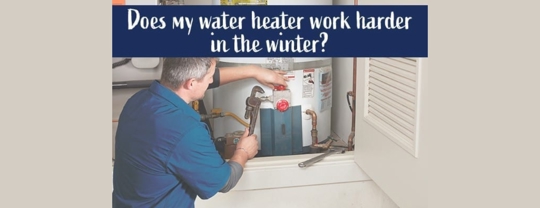
Does My Water Heater Work Harder During the Winter?
Yes. Your water heater works harder in winter because the water entering the tank is colder, the air around the tank is colder, and your family uses more hot water. In Central Texas, hard water scale makes that extra work even harder. This guide explains what is happening inside your tank and how to get it ready before the first cold front hits Austin and the Highland Lakes.
Quick Answer
A water heater works harder in winter for three reasons. Cold inlet water needs more energy to reach the set temperature, so the tank takes longer to recover after a shower. Cooler air in garages, attics, and closets pulls heat out of the tank faster. Longer, hotter showers and more laundry raise demand at the same time. Flushing sediment, insulating the tank and pipes, and setting the thermostat to 120 degrees will lower that strain. If your unit is past 10 years old, fall is the right time to decide between repair and replacement.
Why Your Water Heater Works Harder in Winter
Your water heater has one job: raise incoming water to the thermostat setting and hold it there. Every part of that job gets tougher when the weather cools.
Three Factors That Stack Up
- Colder inlet water. Water arriving from the street or your well is cooler in January than in August. The tank must add more heat to every gallon.
- Standby heat loss. Heat moves from warm to cold. A tank in a 45 degree garage loses heat faster than the same tank in a 90 degree garage.
- Higher demand. People take longer showers, run hotter baths, and wash more heavy clothes in winter. Guests over the holidays add even more load.
Any one of these would increase run time. Together, they can push an aging or scaled up unit past what it can handle.
Cold Inlet Water and Recovery Time
Recovery time is how long a tank takes to reheat a full load of water after you use it. Cold inlet water is the biggest reason recovery slows down in winter.
Why the Math Works Against You
A water heater does not care how many degrees the outdoor air drops. It cares about the temperature rise, which is the gap between incoming water and the thermostat setting. In a Central Texas summer, water sitting in shallow supply lines can arrive warm. In winter, that same line delivers noticeably colder water.
A bigger temperature rise means each gallon needs more BTUs or more watts. The burner or elements do not get stronger in winter, so the only thing that can change is time. That is why the second shower in a row runs lukewarm in January but not in July.
Electric units feel the difference more than gas units because their elements add heat more slowly. A tank already coated in scale has an even smaller margin. If your family has outgrown your tank, learn about sizing options on our water heaters page.
How Hard Water Scale Adds to Winter Strain
Central Texas has some of the hardest water in the country. That hardness turns into a layer of scale on the bottom of your tank, and scale is a poor conductor of heat.
How Scale Forms
Water in Austin, Lago Vista, Lakeway, Marble Falls, and the rest of the Highland Lakes region carries dissolved calcium and magnesium picked up from limestone bedrock and the Edwards Aquifer. When that water is heated, the minerals fall out of solution and settle. In a gas water heater they land on the tank bottom, right above the burner. In an electric unit they coat the lower heating element.
Why Scale Matters More in Winter
A scaled up burner surface has to heat a layer of rock before it can heat water. Gas units start to rumble or pop as water trapped under the sediment boils and escapes. Electric elements overheat and burn out early. Either way, the unit runs longer, costs more to operate, and recovers slower. Add cold inlet water and you have a heater that cannot keep up.
The Fix: An Annual Sediment Flush
Draining the tank once a year removes loose sediment before it hardens. If you have never flushed a tank that is several years old, have a technician do the first one, since a drain valve that has not been opened in years can stick or leak. Our water heater repair team handles flushes, anode rod checks, and valve replacements in the same visit.
For a long term fix, a water softener stops most scale before it reaches the tank. Homeowners in the lake communities often see the biggest payoff because their water is among the hardest in the region.
Insulation Blankets and Thermostat Settings
Two low cost changes cut winter strain immediately: reduce standby heat loss and set the thermostat correctly.
Insulation Blankets
An insulation blanket slows heat loss to the surrounding air. It helps most when the tank sits in a garage, attic, or exterior closet. Many newer tanks are already well insulated, so check the label first. If the tank feels warm to the touch, a blanket will help.
Rules for a safe blanket install:
- Never cover the top of a gas water heater or block the draft hood.
- Keep the blanket clear of the burner access panel and the thermostat on a gas unit.
- Do not cover the temperature and pressure relief valve or its discharge pipe.
- On electric units, leave access to the element panels.
Thermostat Setting
Set the thermostat to 120 degrees. That is hot enough for showers, dishes, and laundry while limiting scald risk and energy use. Turning the dial up to cover winter shortfalls raises standby loss, speeds scale formation, and increases burn risk. If 120 degrees is not enough, the real problem is usually sediment, a failing element, or a tank that is too small.
The February 2021 Freeze: Protecting Exposed Units and Lines
The February 2021 freeze showed what happens when water heaters and supply lines are not protected from extended cold. Homes lost heat for days, and pipes in attics, garages, and exterior walls froze and split. Central Texas builders often put water heaters in attics or garages because winters are usually mild, and those spaces are the first to drop below freezing. Lake homes in Jonestown, Point Venture, and Spicewood often have exposed lines running from a well or pressure tank that never needed freeze protection before 2021.
Steps to Take Before a Freeze Warning
- Insulate every exposed water line in the attic, garage, and crawl space, including the cold inlet to the heater.
- Wrap the tank if it sits in an unconditioned space.
- Know where the water shutoff is so you can close it fast if a pipe bursts.
- If power fails for an extended period in freezing weather, drain the tank to prevent a split. A tankless water heater installation with built in freeze protection also needs power, so ask about backup options.
If a line does burst, close the main and call our emergency plumbing line. Getting water off quickly limits drywall and flooring damage.
Tank vs. Tankless: Deciding Before Winter
If your water heater is past 10 years old, compare the cost of repairs against replacement before winter, not after a failure. Both tank and tankless units work well in Central Texas when they are sized and maintained correctly.
| Factor | Tank Water Heater | Tankless Water Heater |
|---|---|---|
| Winter recovery | Slower recovery with cold inlet water; can run out | Heats on demand; output drops slightly in winter but never runs out |
| Standby heat loss | Constant, higher in cold garages and attics | Almost none |
| Hard water sensitivity | Sediment settles in tank; annual flush needed | Scale builds in heat exchanger; annual descale needed |
| Freeze risk | Tank can split if frozen while full | Internal freeze protection needs power |
| Space | Large footprint | Wall mounted, frees up closet or garage space |
| Upfront cost | Lower | Higher |
| Expected service life | Shorter | Longer with proper maintenance |
| Best fit | Budget focused replacement, limited gas supply | Larger households, long term ownership, space savings |
Questions That Settle the Decision
- How many people shower back to back? Larger families usually benefit most from tankless.
- Where is the unit now? An attic tank that could leak onto ceilings is a strong reason to move to a wall mounted unit.
- Do you have a softener? Tankless units in hard water need one to protect the heat exchanger.
- How long will you own the home? Tankless pays back over years, not months.
Our water heater installation team sizes both options for your household.
Practical Homeowner Tips
- Flush the tank every fall before demand climbs.
- Test the temperature and pressure relief valve once a year by lifting the lever briefly. If it does not reseat or drips afterward, have it replaced.
- Set the thermostat to 120 degrees and leave it there.
- Insulate hot and cold pipes within six feet of the heater.
- Look under and around the tank monthly for rust streaks or moisture.
- Check the anode rod every two to three years. A worn rod means the tank itself is next to corrode.
Warning Signs You Need a Professional
- Rumbling, popping, or knocking from the tank, which signals heavy sediment.
- Rusty or discolored hot water at the tap.
- Water pooling under the tank or rust at the seams.
- Hot water that runs out much faster than it did last winter.
- A pilot light that keeps going out or a burner that cycles constantly.
- A relief valve that drips or has discharged.
- A tank older than 10 years that has never been serviced.
Leaks in particular do not wait. A failed tank in an attic can damage several rooms below.
DIY vs. Professional
| Task | DIY | Professional |
|---|---|---|
| Setting the thermostat to 120 degrees | Yes, on most units | Recommended on gas units if you are unsure |
| Adding an insulation blanket | Yes, following safety rules | Yes, especially on gas units |
| Insulating exposed pipes | Yes | Yes for attic and crawl space runs |
| Testing the relief valve | Yes, with care | Yes, plus replacement if needed |
| Annual sediment flush | Yes on a newer, regularly flushed tank | Yes on older tanks or first time flushes |
| Anode rod replacement | Difficult, rod is often seized | Yes |
| Element or thermostat replacement | Not recommended | Yes |
| Gas valve, burner, or venting work | Never | Licensed plumber only |
| Tank or tankless replacement | Never | Licensed plumber only, permit required |
Cost Considerations
A flush and inspection costs far less than an emergency replacement during a cold snap. Insulation blankets and pipe wrap are among the cheapest upgrades in the house. Repairs on a unit under 8 years old usually make sense. Past 10 years, a leaking tank or failed burner often costs more to fix than the remaining life justifies. Tankless units cost more upfront but typically last longer, use less energy, and eliminate the risk of a tank rupture.
Our financing options help spread the cost of a replacement, and high efficiency equipment may qualify for utility rebates or incentives.
Maintenance Recommendations
An annual flush and inspection is the best way to prepare your water heater for winter. The visit should include draining sediment, testing the relief valve, checking the anode rod, inspecting venting on gas units, confirming the thermostat setting, and looking for corrosion at every fitting.
The Ultimate Home Care Plan builds that service into a yearly whole home visit covering plumbing, heating, and cooling. Members get priority service when the first freeze hits and call volume spikes. For a Central Texas homeowner dealing with hard water, that yearly flush is what keeps a tank running into its second decade instead of failing in its eighth winter.
Common Mistakes Homeowners Make
- Turning the thermostat up in winter. This masks the real problem and raises scald risk and scale buildup.
- Never flushing the tank. Sediment hardens over time and eventually cannot be drained at all.
- Covering the top or controls of a gas water heater with a blanket. This creates a fire and carbon monoxide hazard.
- Ignoring a dripping relief valve. It is a safety device and a warning sign, not a nuisance.
- Waiting for a total failure before replacing a 12 to 15 year old tank. Failures come at the worst time, usually during a cold snap when every plumber is booked.
- Installing tankless in hard water without treatment. The heat exchanger scales up and efficiency drops.
Local Considerations for Central Texas Homes
Hard water is the defining factor for water heaters in this region. Homes drawing from the Edwards Aquifer in Austin and from Highland Lakes systems in Lago Vista, Lakeway, and Marble Falls all see rapid scale buildup. Annual flushing is not optional here.
Well water is common around Lake Travis, Lake LBJ, and Lake Buchanan. It can carry even higher mineral loads and sometimes iron, which accelerates tank corrosion. Homes on wells in Spicewood and Horseshoe Bay should pair the water heater with a softener.
Older homes in central Austin often have water heaters in interior closets or garages, while newer developments in Cedar Park, Leander, and Georgetown frequently place them in attics. Attic units need drain pans, working drain lines, and freeze protection.
Seasonal Considerations
- Fall: Schedule the flush and inspection. Add insulation. Decide on repair vs. replacement while contractors have open schedules.
- Winter: Watch recovery time. Before any freeze warning, wrap exposed lines and confirm you can reach the shutoff.
- Spring: Check for leaks and corrosion after a winter of hard running. Test the relief valve.
- Summer: Demand drops, so this is a good time to replace an aging unit without a cold weather interruption.
Frequently Asked Questions
Does a Water Heater Really Use More Energy in Winter?
Yes. Colder inlet water requires a larger temperature rise, and cooler surrounding air increases standby loss. Most Central Texas households also use more hot water in winter. The combination raises run time and energy use noticeably compared with summer.
Why Does My Hot Water Run Out Faster in Winter?
Recovery time is longer because each gallon of cold inlet water needs more heat. The burner or elements have fixed output, so the tank takes longer to reheat between uses. Sediment buildup makes the gap even wider.
What Temperature Should I Set My Water Heater to in Winter?
Keep it at 120 degrees year round. That setting balances comfort, scald safety, and energy use. Turning it higher does not fix a slow recovery problem and increases scale buildup.
Is a Water Heater Blanket Worth It in Texas?
Yes when the tank sits in a garage, attic, or other unconditioned space. Winter nights in Central Texas do drop into the 30s and below, and a warm tank in a cold room loses heat quickly. Check the tank label first, since some newer models already have thick insulation.
How Often Should I Flush My Water Heater in Central Texas?
Once a year. Hard water from the Edwards Aquifer and Highland Lakes deposits sediment quickly. Homes without a softener, or homes on well water, may benefit from flushing twice a year.
Can Hard Water Damage a Water Heater?
Yes. Scale insulates the burner or elements from the water, forces longer run times, and leads to overheating and early failure. Hard water is the most common reason tank heaters in Austin and the lake communities fail before their expected life.
Should I Drain My Water Heater if the Power Goes Out During a Freeze?
If the outage is expected to last long enough for the space to drop below freezing, yes. A full tank that freezes can split. Close the cold supply, open a hot faucet, and drain the tank through the drain valve to a safe location. Refill fully before restoring power or gas.
How Long Should a Water Heater Last in Central Texas?
Tank units often last less time here than the national average because of hard water. With annual flushing and a softener, many reach 12 years or more. Tankless units typically last longer when descaled yearly.
Is Tankless Better for Winter in Texas?
Tankless units never run out of hot water, which solves the winter recovery problem. Their flow rate does drop slightly in cold weather because the temperature rise is larger. Proper sizing accounts for winter inlet temperatures.
Do I Need a Permit to Replace a Water Heater in Austin?
Yes. Most Central Texas jurisdictions require a permit and inspection because gas, venting, and relief valve discharge carry safety requirements. A licensed plumber handles the permit as part of the job.
Conclusion and Next Steps
Your water heater works harder in winter because cold inlet water, colder surroundings, and higher demand arrive together. In Central Texas, hard water scale turns that seasonal strain into a failure. Flush the tank every fall, insulate the tank and exposed lines, keep the thermostat at 120 degrees, and protect attic and garage units before any freeze warning. If your unit is past 10 years old, decide between repair, a new tank, or tankless while you still have hot water and time to choose.
Get your water heater ready before the first cold front. Lantz Home Services has served Central Texas since 1972 with licensed plumbers who know hard water, attic installs, and freeze protection. Call Lantz Home Services today at (512) 710-1032 to schedule a water heater flush, repair, or replacement estimate.