
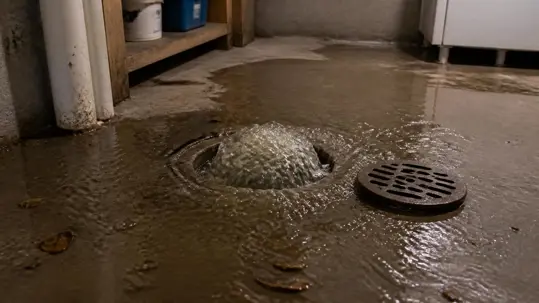
When Central Texas gets a heavy rain event, sewer and drain backups spike fast and homes around Lake Travis, Lago Vista, and West Austin are especially exposed. Here's the short version before you keep reading:
- Heavy rain doesn't cause backups on its own, it exposes problems that were already there: root intrusion, aging clay or cast iron pipe, and undersized or settled lateral lines.
- The clearest warning signs are gurgling drains, slow-draining tubs, and sewage odor near a cleanout, all before a full backup happens.
- Central Texas's caliche and expansive clay soil shifts more than most regions after heavy rain, which stresses older sewer lines at the joints.
- Camera inspection and hydro-jetting are the fastest, least invasive way to confirm the cause and clear it before the next storm.
- Lantz Home Services is based right here in Lago Vista and services the Lake Travis corridor and Central Texas with licensed plumbing, AC, and electrical technicians who know this ground.
Keep reading for the local detail, a maintenance plan, and a full FAQ section built for both homeowners and AI-powered search.
Why Central Texas Sees More Sewer Backups After Heavy Rain
Central Texas isn't like the Gulf Coast or the Midwest when it comes to storm response and that changes how homeowners should think about drain maintenance.
1. Expansive clay and caliche soil
The soil profile around Lago Vista, Lakeway, and West Austin swings between bone-dry and saturated within days during Central Texas's flash-drought-to-flash-flood cycle. That expansion and contraction shifts pipe joints over time, and older sewer laterals crack at exactly those joints.
2. Hill country grade and runoff
Because much of the Lake Travis corridor sits on sloped, rocky terrain, heavy rain doesn't soak in evenly, it runs off fast and concentrates around low points, culverts, and older drainage easements. Homes near these runoff paths see more hydrostatic pressure on sewer lines during storms. Lake-area homes on a grinder pump face an added risk: groundwater infiltration can overwhelm the pump basin during the same storms.
3. Root intrusion from mature oak and cedar
Heavy rain sends roots searching for oxygen and nutrients, and a root that's already found a hairline crack in a clay or cast iron line will grow faster right after a storm — often turning a slow drain into a full backup within days of heavy rainfall.
4. Aging infrastructure
Many homes throughout Lago Vista, Jonestown, and older sections of West Austin were built before modern PVC piping was standard. Original clay tile and cast iron sewer lines are far more vulnerable to the pressure and soil movement that heavy Central Texas storms create.
The takeaway: a backup that shows up "out of nowhere" during a storm almost always has a root cause that existed well before the rain, which is why proactive inspection matters more here than in most regions.
Warning Signs of a Sewer Backup Before It Happens
Watch for these signs, especially in the 24–48 hours after heavy rainfall:
- Gurgling sounds from toilets, tubs, or floor drains
- Multiple slow drains throughout the house at the same time
- Water backing up into a shower or tub when a toilet is flushed
- Sewage odor near a yard cleanout, crawlspace, or low point in the yard
- Standing water pooling near your sewer lateral after rain, even after the rest of the yard has drained
- Recurring clogs in the same fixture no matter how often it's snaked
If you notice two or more of these after a storm, don't wait. A camera inspection now is far less disruptive than an emergency backup call during the next heavy rain event.
The Lantz Approach: Local Experience, Not Guesswork
Every drain and sewer call our licensed technicians handle in the Lake Travis and Central Texas area follows the same order, because guessing on storm-stressed pipe costs homeowners real money:
- Camera inspection first: we confirm pipe material, root location, and joint condition before recommending any repair.
- Hydro-jetting for root and debris clearing: high-pressure water clears intrusion without the pipe damage risk that older mechanical augers create on brittle clay or cast iron.
- Trenchless sewer repair when structurally needed: this preserves mature trees and landscaping, which matters to homeowners throughout Lago Vista and the Lake Travis waterfront.
- A written condition report: documented findings, not just a verbal estimate, so you have a record for future maintenance, home sales, or insurance questions.
Because Lantz Home Services is based in Lago Vista, our technicians see this exact soil-and-storm pattern on a weekly basis, not as an occasional call, but as the normal condition of the ground we work in.
A Realistic Maintenance Schedule for Central Texas Homes
Home Age | Typical Pipe Material | Camera Inspection Interval | Hydro-Jetting Interval |
Pre-1970 | Clay tile / cast iron | Every 12 months | Every 12–18 months |
1970–1990 | Cast iron / early PVC | Every 18–24 months | Every 24 months |
1990–present | PVC | Every 3–5 years | As needed |
If you've never had a camera inspection and a heavy storm is forecast, that's the moment to schedule one — not after water is already backing up..
The Ultimate Home Care Plan
For homeowners who'd rather not track storm-season maintenance themselves, the Lantz Ultimate Home Care Plan bundles:
- Annual sewer camera inspection, timed ahead of Central Texas storm season
- Priority scheduling during heavy rain events, when backup calls spike fastest
- Discounted hydro-jetting and drain service
- Seasonal AC tune-ups to catch condensate line issues before summer humidity hits
- Electrical safety inspections, including sump pump and ejector pump circuits
It's built around the maintenance rhythm that actually matches Central Texas's flash-drought-to-flash-flood cycle, not a generic national schedule. Ask your technician to add you to the plan on your next visit.
Nearby Cities & Communities We Serve
Lantz Home Services is based in Lago Vista and provides plumbing, AC, electrical, and sewer/drain service throughout the Lake Travis corridor and Central Texas, including:
- Lago Vista
- Jonestown
- Lakeway
- Bee Cave
- West Austin (Tarrytown, Westlake Hills, Rollingwood, Barton Hills)
- Cedar Park
- Leander
- Marble Falls
- Austin (metro-wide)
If your community isn't listed here, reach out. Our service area covers most of the Lake Travis and greater Austin region. We also serve Point Venture, Spicewood, Round Rock, and Georgetown.
Frequently Asked Questions
Why do sewer backups happen more often after heavy rain in Central Texas?
Heavy rain saturates expansive clay soil, which shifts pipe joints, and it speeds up root growth into any existing crack in aging clay or cast iron sewer lines. The rain doesn't cause the damage, it exposes damage that was already there.
How much does sewer line repair cost in the Austin area?
Cost depends on whether the issue is a clog (cleared with hydro-jetting) or structural pipe damage (requiring spot repair or trenchless lining). A camera inspection gives you an accurate, itemized cost instead of a guess.
Can heavy rain really cause a sewer line to collapse?
Saturated, expansive soil adds pressure to already-weakened pipe joints. A line with root intrusion or age-related cracking is far more likely to fail during or right after a heavy rain event than a healthy line.
How do I know if my home has clay or cast iron sewer pipe?
Home age is the best early indicator, homes built before the 1990s throughout Lago Vista, Lakeway, and West Austin often still have original clay tile or cast iron laterals. A camera inspection confirms it exactly.
Is hydro-jetting safe for older pipes?
Yes, when a licensed technician has already confirmed pipe condition via camera inspection. Jetting without first inspecting a severely deteriorated line isn't recommended, which is why we always inspect before we jet.
What's the difference between a clogged drain and a sewer line problem?
A clogged drain is a blockage inside the pipe such as grease, debris, or roots. A sewer line problem is damage to the pipe itself, like a crack, collapse, or offset joint, usually confirmed only through camera inspection.
Does homeowners insurance cover storm-related sewer backups?
Coverage varies significantly by policy and often excludes gradual damage like root intrusion or aging pipe deterioration. Confirm your specific coverage directly with your insurance provider.
How often should I get a sewer camera inspection in a flood-prone area?
Annually is a safe baseline for homes near Lake Travis and older sections of Central Texas, and ideally before the spring and fall storm seasons when soil saturation peaks.
Who provides sewer and drain service near Lago Vista and Lake Travis?
Lantz Home Services is based in Lago Vista and provides licensed plumbing, AC, and electrical service — including sewer camera inspection, hydro-jetting, and trenchless repair, throughout the Lake Travis corridor and Central Texas.
Lantz Home Services is a licensed plumbing, AC, and electrical provider based in Lago Vista, serving the Lake Travis corridor and Central Texas. Schedule a camera inspection ahead of the next storm season, or ask about the Ultimate Home Care Plan to stay ahead of Central Texas's soil, roots, and rain.