
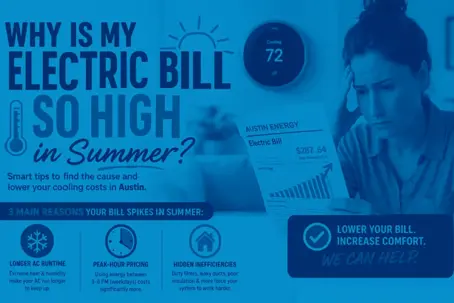
Why Is My Electric Bill So High in Summer? (Austin Homeowner Guide)
If your summer electric bill just spiked, it’s almost always caused by one (or more) of these three things:
higher AC runtime, peak-hour energy pricing, or hidden inefficiencies in your home or system.
The fastest way to lower your bill is to:
- Verify your energy usage (not just cost)
- Fix airflow and maintenance issues
- Reduce heat entering your home
This guide walks you through exactly how to diagnose the problem in under an hour, and what actually fixes it.
Step 1: Don’t Guess, Check Your Electric Bill First
Before blaming your AC, confirm whether your bill is actually higher because of usage.
Most Austin homeowners skip this step and misdiagnose the issue.
Quick 5-minute audit:
- Check billing cycle length
A 32–33 day cycle during peak heat will look dramatically higher than a normal month. - Compare kWh, not dollars
If usage is flat but cost increased, your electric rate changed (common with time-of-use plans). - Look for peak-hour spikes
Austin Energy charges more between 3 PM – 6 PM (weekdays).
Running appliances during this window can quietly inflate your bill. - Account for lifestyle changes
Working from home, guests, pool use, or EV charging all increase demand.
👉 If your kWh usage increased, your HVAC system is usually the biggest driver.
Step 2: Why Your AC Runs More in Texas Heat (Even When It’s Working)
Here’s what most homeowners misunderstand:
A higher bill doesn’t automatically mean your AC is broken.
In Central Texas summers, a properly working system will naturally run longer because:
- Extreme temperature difference
Keeping your home at 72°F when it’s 105°F outside requires long cooling cycles. - Humidity removal
Your AC removes moisture before lowering temperature—this uses extra energy. - Low thermostat settings
Holding a constant low temp all day costs significantly more than gradual adjustments.
Quick win:
Raise your thermostat 2°F for one week and track the difference.
Use ceiling fans, but only in occupied rooms.
Step 3: The 6 Most Common Reasons Your AC Is Wasting Energy
If your usage jumped, your system is likely working harder than it should.
Here are the biggest culprits we see in Austin homes:
1. Dirty Air Filter
Restricted airflow = higher energy draw.
Fix: Replace every 30 days in summer.
2. Dirty Coils (Major Efficiency Killer)
Dust blocks heat transfer, forcing longer run times.
Impact: One of the biggest causes of energy waste.
3. Refrigerant Leak
Your system runs constantly but never reaches temperature.
Signs: Ice buildup, hissing sounds.
4. Leaky Ductwork
Up to 20% of cooled air can escape into your attic.
Clues:
- Uneven room temperatures
- Dust buildup near vents
5. Bad Thermostat Placement
Heat from windows or lighting tricks your system into overcooling.
6. Failing Electrical Components
Weak capacitors or electrical issues cause:
- Hard starts (energy spikes)
- Short cycling (constant restarting)
⚠️ These require professional diagnostics, don’t open panels yourself.
Step 4: Your Home Might Be the Real Problem (Not Your AC)
If some rooms never cool down, your home’s insulation and sealing are likely the issue.
In Texas, attic temps can exceed 140°F.
That heat pushes into your home nonstop.
Biggest Heat Gain Sources:
- Poor attic insulation
If you see joists, insulation is too thin. - Air leaks
Around doors, attic hatches, recessed lighting. - West-facing windows
Afternoon sun acts like a heater.
Fix What Matters First:
Fast, low-cost fixes:
- Weatherstripping
- Door sweeps
- Sealing visible gaps
Mid-range upgrades:
- Solar screens
- Blackout curtains
High-impact investment:
- Air sealing + insulation (done together for best ROI)
Step 5: Other Hidden Energy Drains in Summer
Even if your AC is fine, these can drive your bill up:
- Pool pumps (often #2 energy user)
- EV charging during peak hours
- Electric water heaters (more usage with guests)
- Dryers and ovens in the afternoon
- Old lighting (halogen bulbs) adding heat indoors
Also watch for electrical warning signs:
- Flickering lights
- Warm outlets
- Breakers tripping
These aren’t just inefficiencies, they’re safety concerns.
How to Lower Your Electric Bill (Prioritized Plan)
This Week (Immediate Wins)
- Replace air filter
- Shift appliance use to off-peak hours
- Close blinds during peak sun
This Season (Best ROI)
- Schedule professional AC maintenance
- Clean coils + check refrigerant
- Improve airflow
This alone can reduce cooling costs by 5–15%
Long-Term (Big Savings)
- Seal air leaks
- Upgrade attic insulation
- Replace aging HVAC systems (10+ years)
When to Call a Professional
If you notice any of the following, it’s time for a diagnostic:
- AC runs constantly but doesn’t cool
- Rooms are unevenly cooled
- Energy usage keeps rising year over year
- System is 10+ years old
A proper inspection connects the dots between electrical, HVAC, and home efficiency, which is where most DIY troubleshooting falls short.
FAQs
Is it normal for electric bills to increase in summer?
Yes. but compare kWh usage, not just total cost. Rate changes and peak pricing often play a role.
How do I know if my AC is the problem?
Look for:
- Constant running
- Weak airflow
- Inability to reach set temperature
How often should I change my AC filter?
Every 30 days in summer (more often with pets or allergies). However different quality filters have unique schedules.
Will maintenance actually lower my bill?
Yes. A tune-up can reduce energy usage by 5–15%, especially if coils are dirty.
Repair or replace my AC?
Consider replacement if:
- System is 10–12+ years old
- Repairs are frequent
- Energy bills keep increasing
Final Takeaway
High summer electric bills in Austin are rarely caused by just one issue.
They’re usually a combination of:
- Longer AC runtimes
- Peak energy pricing
- Hidden inefficiencies in your system or home
Start with your usage data, fix airflow issues, and reduce heat gain.
If your numbers still don’t make sense, a professional diagnosis will pinpoint the exact cause—and stop the cycle before your next bill arrives.Leave it to Lantz!